“How much does it cost to make glasses?” is one of the most common questions buyers ask — and one of the hardest to answer with a single number. The factory cost of an eyewear order isn’t one price; it’s a stack of drivers that interact. Understanding that stack helps you read quotes accurately, compare suppliers fairly, and design a product that hits your target price. This guide breaks down where the money goes.
Key takeaways
- There is no single “price of glasses” — cost is built from material, tooling, labor, finishing, lens, quantity, certification and shipping.
- Material sets the base tier — TR90 and basic metal are value; acetate is mid-to-premium; titanium is premium.
- Quantity is the biggest lever — fixed tooling and setup spread across more units, so unit price falls as volume rises.
- Compare like for like — same material, finish, quantity and Incoterm, or quotes aren’t comparable.
What goes into the cost of a pair of glasses?
A finished frame passes through molding or cutting, welding or assembly, finishing, lens fitting and inspection — and each step adds cost. At a high level, a custom eyewear quote is built from these components:
| Cost driver | What it covers | How it behaves |
|---|---|---|
| Frame material | Acetate, TR90, metal, titanium | Sets the base tier |
| Tooling | Molds/cutting dies for a new shape | One-time; spread over the run |
| Labor & process | Injection/cutting, welding, assembly, polishing | More steps = higher cost |
| Finishing & decoration | Coatings, plating, lamination, logo | Adds per-piece cost |
| Lens & treatments | Sun lenses, blue-light, RX-ready, coatings | Varies by lens spec |
| Order quantity | Units per style | Spreads fixed costs; biggest lever |
| Certification & testing | CE, FDA, REACH, etc. | Often per-order/market |
| Packaging | Cases, boxes, displays | Custom packaging has its own MOQ |
| Shipping & Incoterm | FOB, CIF, DDP | Changes landed cost |
The rest of this guide walks through each driver.
Material: the base tier
Material is the first thing that sets your price band. As a rough hierarchy:
- TR90 and basic metal (stainless steel, alloys) — the value tier. Light, durable, quick to produce, ideal for high-volume and price-sensitive programs.
- Acetate — mid-to-premium. Richer color depth and hand-finishing raise the cost; premium Italian acetate (e.g. Mazzucchelli) sits higher still.
- Titanium — the premium tier. Light, hypoallergenic and corrosion-resistant, but harder to machine, which raises cost. For a deep-dive on titanium grades and production, see our titanium eyewear manufacturing guide.
- Mixed material (acetate fronts with metal temples) lands between, depending on the mix.
The cheapest material isn’t automatically the right one — the goal is to match material to your price point and brand positioning. Our frame material guide covers the trade-offs in depth.
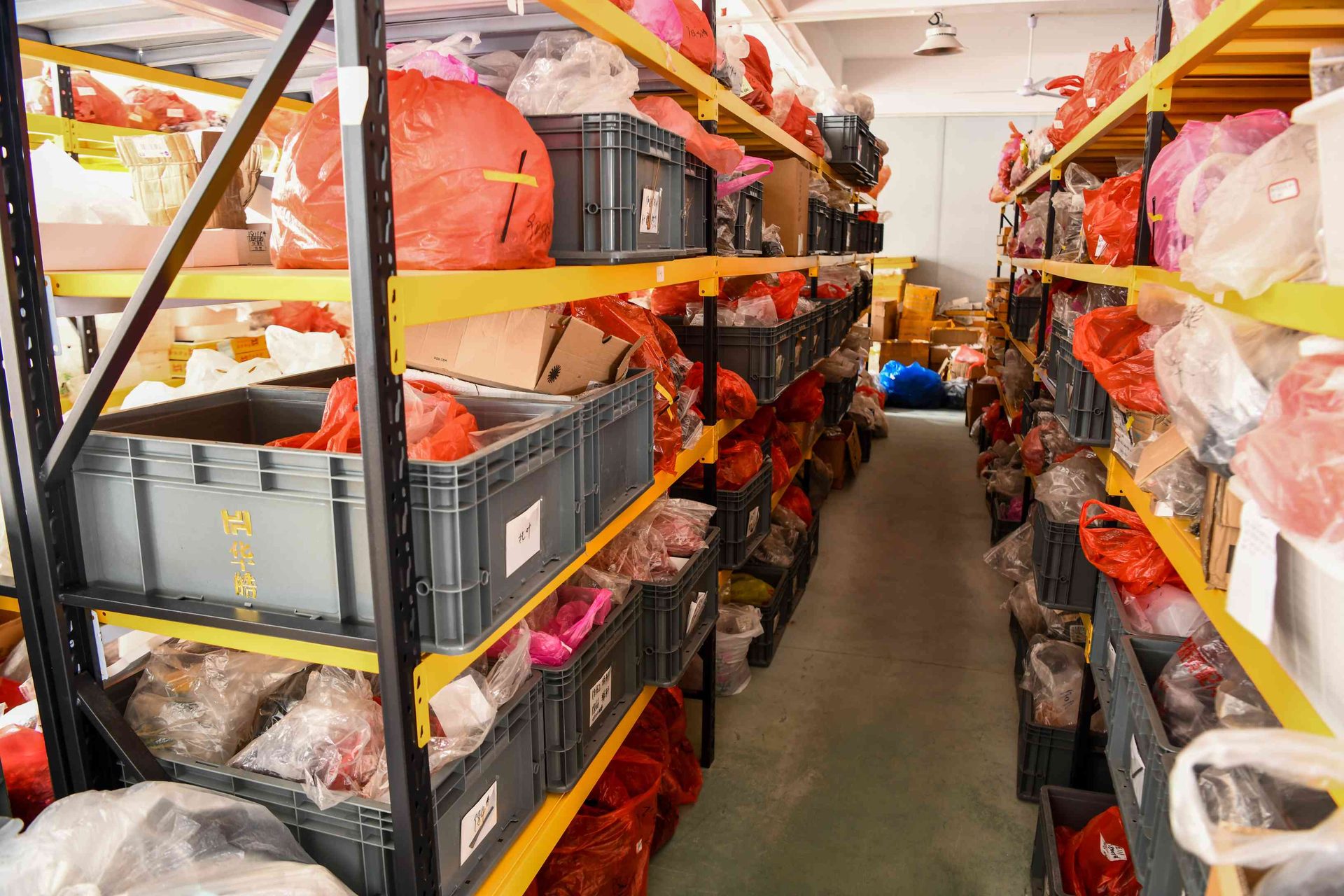 Material grade is the first cost driver: stock acetate and premium Italian acetate sit at very different price points.
Tooling: a one-time cost, spread out
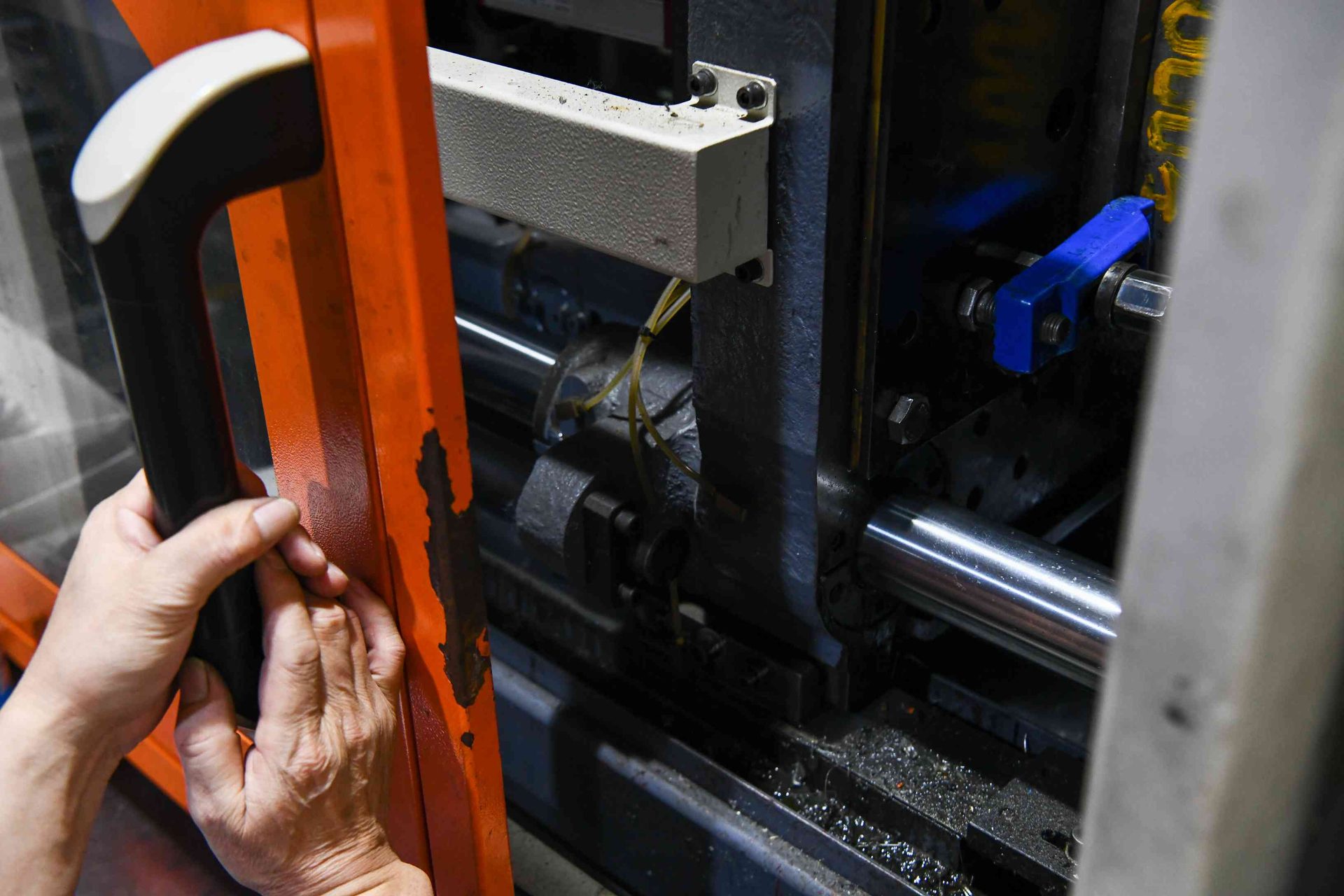
A brand-new shape needs tooling — an injection mold for TR90, or cutting dies and patterns for acetate. That’s a one-time, fixed cost that doesn’t change with quantity. It’s amortized across the run, which is exactly why low quantities feel expensive per unit and why reusing an existing mold (custom color instead of custom shape) keeps costs down. If you don’t need a new shape, you avoid this line entirely.
Labor and process steps
Every process step adds labor. A simple injected TR90 frame is quick; a hand-finished acetate frame with riveted hinges, multi-step polishing and assembly takes far more skilled labor. Metal frames add welding and plating steps. The more steps and the more hand-work a design requires, the higher the unit cost — which is why two frames in the same material can be priced differently based on construction.
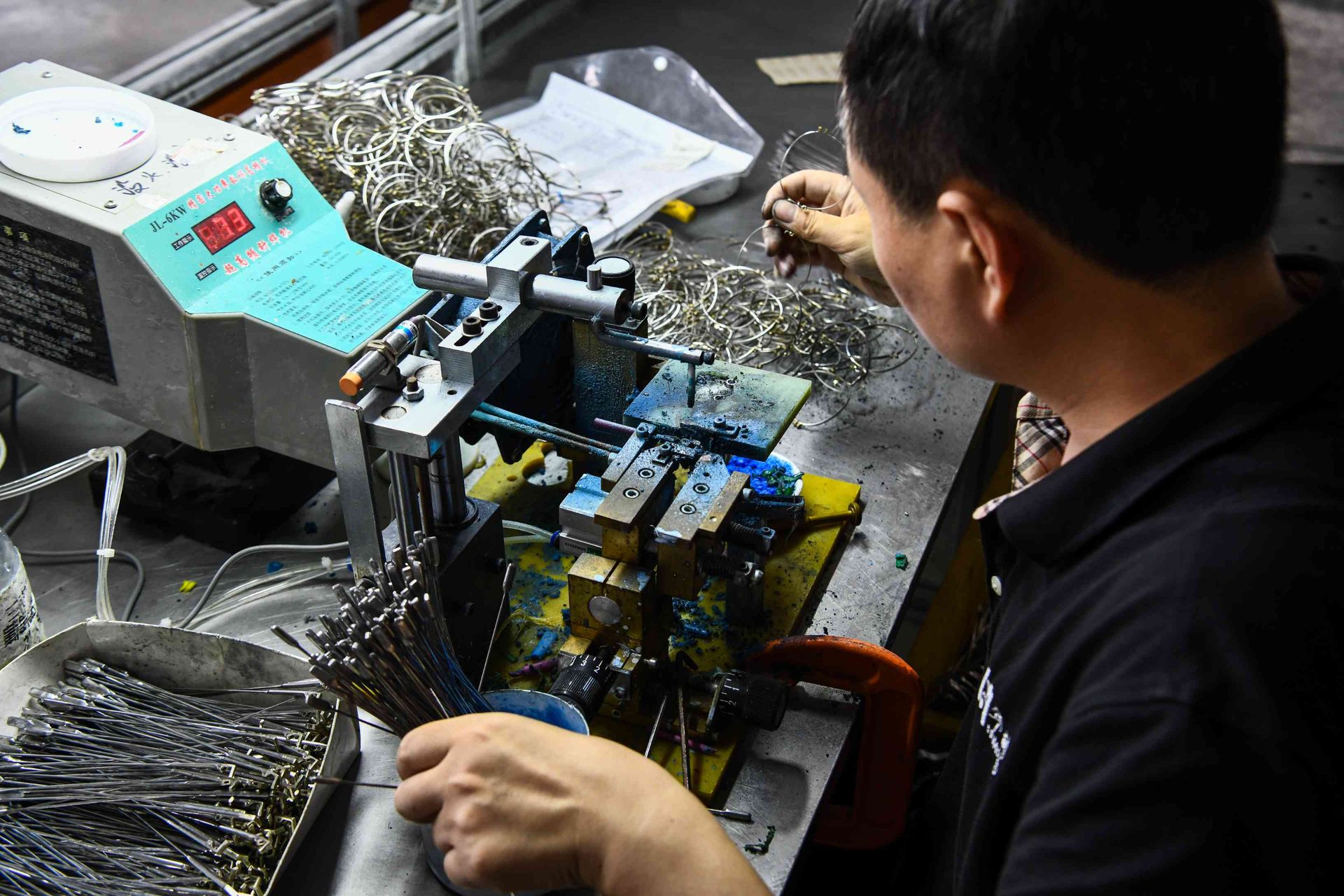 Labor scales with construction: welded metal and hand-finished acetate carry more process steps than a simple injected frame.
Finishing, decoration and lens
Finishing is where a frame gets its final look — and several optional costs:
- Coatings and plating — PVD/IP plating on metal, matte or glossy finishes, crystal or pattern effects on acetate.
- Lamination — layered acetate for two-tone or gradient looks.
- Logo and branding — laser engraving or pad printing; available from as few as 5 pieces per style on suitable items (see how to add your logo).
- Lens and treatments — for sunglasses and blue-light styles, the lens material, polarization, mirror or gradient tints and coatings all affect cost.
Each of these is a per-piece add-on, so the same frame can carry very different prices depending on how it’s finished.
Order quantity: the biggest lever
Because tooling and setup are fixed, the single biggest influence on unit price is quantity. At the MOQ (typically around 500 pieces per style), fixed costs are spread thinly and the per-unit price is at its highest; scaling to several thousand pieces per style brings it down. If budget matters, fewer styles at higher volume each is usually cheaper than many styles at the minimum. We cover this in detail in our eyewear MOQ guide.
Certification, packaging and shipping
Three costs sit on top of the unit price and are easy to forget:
- Certification and testing — selling into the EU, US or other markets may require CE, FDA, REACH or RoHS compliance and test reports, usually costed per order or per market. See eyewear certifications explained.
- Packaging — cases, boxes and display-ready packaging. Custom branded packaging typically has its own minimum, often starting around 1,000 pieces.
- Shipping and Incoterm — your landed cost depends on whether you buy FOB (you arrange freight from the port), CIF (cost, insurance and freight to your port) or DDP (delivered, duties paid). The same frame has a different total cost under each term.
How to get an accurate quote
Because all these drivers interact, a vague request gets a vague price. The fastest route to an accurate, itemized quote is to specify: the material, the design (or a reference/sketch), the finish and decoration, the lens (for sun/blue-light), your quantity, your target market (for certification), and your preferred Incoterm. A tech pack bundles most of this into one document and removes guesswork.
A good manufacturer will return an itemized quote — frame, tooling, finishing, packaging and shipping as separate lines — so you can see exactly where the cost sits and where to adjust. That transparency also lets you value-engineer: switch a material tier, simplify a finish, or consolidate styles to hit your target price without losing the look.
Tell us your material, design, finish, quantity and target market, and we’ll come back within 24 hours with an itemized quote and a production plan. Request a quote or browse our ready-stock catalogs to start with lower upfront cost.